
For Brooklyn business owners and property managers, a failing roof is more than an inconvenience—it’s a severe liability that can halt operations, destroy inventory, and result in costly tenant lawsuits. Protecting your bottom line starts at the top. Here are the commercial roofing best practices for Brooklyn businesses to ensure long-term durability and compliance with NYC building codes.
Proactive maintenance is the cornerstone of commercial roofing. Bi-annual inspections, utilizing reflective "cool roof" materials like TPO, and strictly controlling access to the roof will extend your roof's lifespan by decades.
1. Implement a Strict Maintenance Schedule
A "set it and forget it" mentality will destroy a commercial roof. In a dense urban environment like Brooklyn, debris accumulates rapidly.
- Clear the Drains: Commercial flat roofs rely on internal drains and scuppers. Fall leaves from neighboring trees and urban trash can easily clog these drains, leading to massive water ponding. Standing water breaks down roofing membranes and adds immense structural weight to the building.
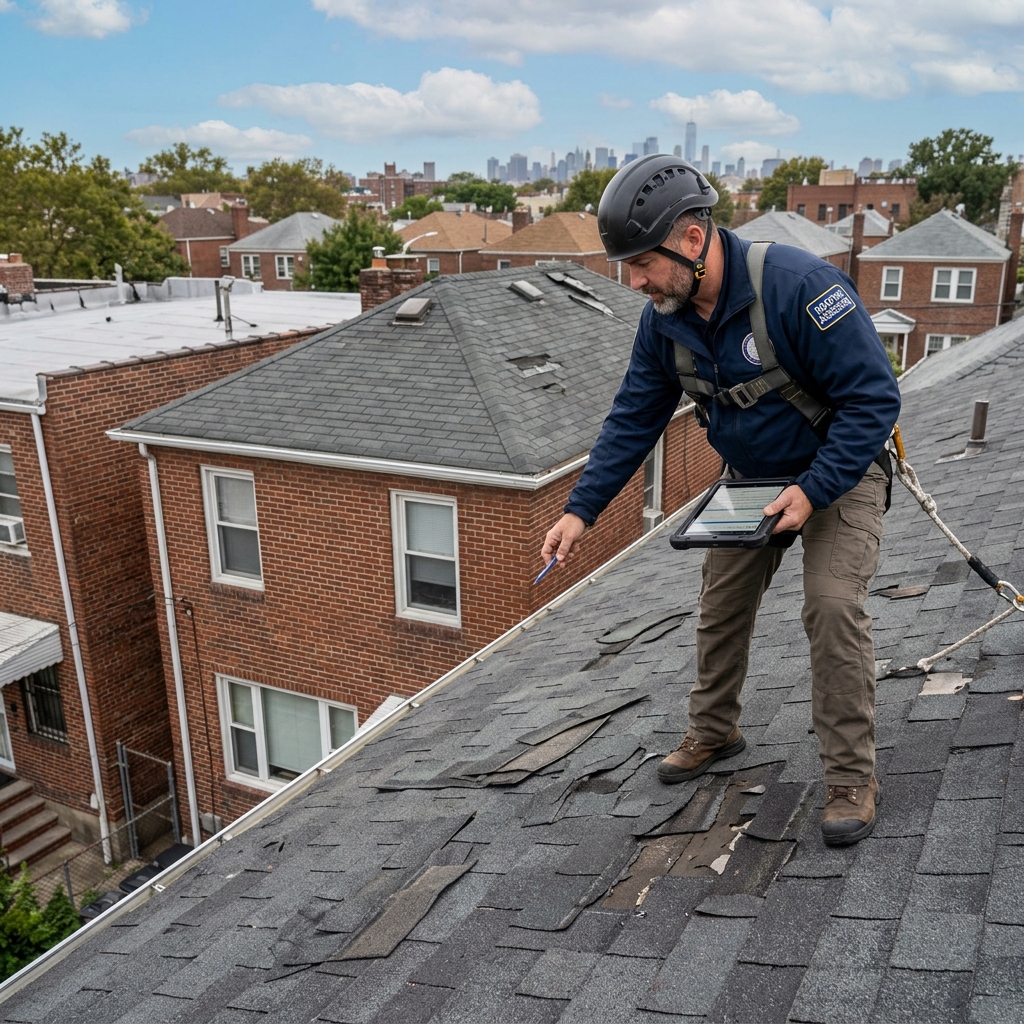
- Bi-Annual Inspections: Schedule a professional roof inspection every spring and late fall. A Brooklyn roofing company will check for membrane shrinkage, failing flashings, and pitch pocket degradation around HVAC units.
2. Control Roof Access
The number one cause of commercial roofing leaks in Brooklyn is not weather—it is third-party damage. HVAC technicians, satellite installers, and electricians frequently puncture flat roof membranes by dropping tools, dragging heavy equipment, or improperly driving screws directly into the decking.
- Sign-In Sheets: Require any contractor accessing the roof to sign in. If a leak suddenly appears near an AC unit a day after an HVAC crew was up there, you know exactly who is responsible.
- Walkway Pads: Install high-visibility walkway pads leading from the roof hatch to all mechanical equipment. Mandate that all personnel stay on these pads to protect the underlying TPO or EPDM membrane from puncture and heavy foot traffic.
3. Prioritize Energy Efficiency (Cool Roofs)
Under NYC's Local Law 97, reducing building emissions and improving energy efficiency is mandatory for many commercial properties. Upgrading your roof is one of the fastest ways to comply.
When planning a roof replacement, opt for a highly reflective, white TPO membrane or a white fluid-applied coating. These "cool roof" systems reflect UV rays rather than absorbing them, drastically reducing the urban heat island effect and significantly lowering your summer cooling bills.
4. Choose the Right Membrane for Your Business
Not all commercial roofs serve the same purpose. Your business operations should dictate the material you choose:
- Restaurants: Exhaust vents expel animal fats and cooking oils onto the roof. EPDM rubber degrades quickly when exposed to these oils. TPO or PVC membranes are vastly superior for restaurant roofs.
- Heavy Foot Traffic: If your roof serves as an outdoor tenant amenity space or a green roof, a robust, multi-ply Modified Bitumen system with a protective paver layer is required to withstand the structural load.
Never ignore a minor ceiling stain in a commercial building. Water travels horizontally along metal decking and steel I-beams. By the time water drips onto a desk or product inventory, the actual roof leak may be 30 feet away, and the insulation above is likely saturated.