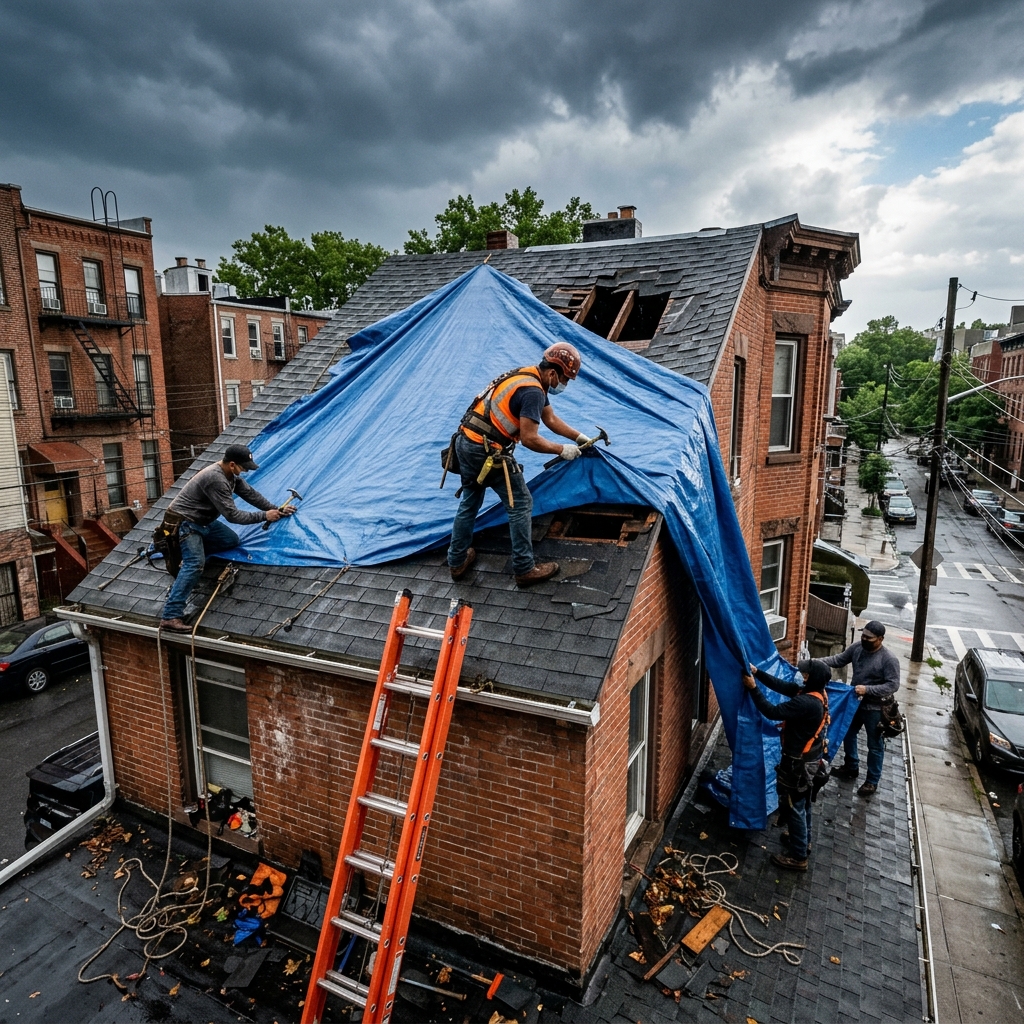

When a massive Nor'easter hits the Northeast corridor, bringing hurricane-force winds, driving rain, and heavy snow loads, properties across New York are put to the ultimate test. If your roof fails during the event, waiting days for a permanent repair isn't an option. You need immediate emergency roof repair strategies after a New York storm to mitigate catastrophic water damage to your home's interior.
Professional shrink wrapping and heavy-duty tarping are the two most effective emergency strategies to dry-in a storm-damaged roof. Never attempt to permanently patch a roof while the decking is still soaked from the storm.
Winter Storms: Ice Dams and Heavy Snow Loads
Winter storms pose a unique threat to New York roofs. When feet of snow accumulate, the immediate danger is structural overload, particularly on older flat roofs. However, the more common and insidious threat is the ice dam.
Ice Dams: These occur when poor attic insulation allows heat to escape and melt the snow on the roof. The water flows down to the unheated eaves and freezes, creating a dam. As more snow melts, the water backs up under the shingles.
Emergency Strategy: A professional roofing company in Brooklyn will respond to ice dam emergencies by carefully creating channels in the ice using steam or calcium chloride (never rock salt or sharp tools, which destroy shingles) to allow the trapped water to drain.
The Power of Roof Shrink Wrapping
For severe damage—such as when high winds completely strip away large sections of shingles, or a tree breaches the roof deck—a standard blue tarp may not survive the remaining high winds of a New York coastal storm. The superior emergency strategy is roof shrink wrapping.
Roofers wrap the damaged section (or the entire roof) in a heavy-duty, UV-resistant plastic membrane. Using a specialized propane heat gun, they shrink the plastic tightly against the contours of the roof, creating a seamless, drum-tight waterproof seal. A shrink-wrapped roof can protect a New York home for up to a year while the homeowner navigates complex insurance claims and waits for a permanent roof replacement.
Interior Water Mitigation Strategies
While you wait for emergency roofing services to arrive, your immediate strategy must focus on the interior of your home:
- Relieve Water Weight: If your ceiling drywall is bubbling or sagging, place a large bucket underneath and puncture the center of the bulge with a screwdriver. Draining the water prevents the entire ceiling from collapsing.
- Isolate Electrical Hazards: If water is leaking near light fixtures or electrical outlets, immediately turn off the power to that room at the breaker box. Water and electricity are a deadly combination during a storm.
- Protect Hardwood and Valuables: Move furniture and lay down plastic sheeting or thick towels over hardwood floors to prevent warping.
Transitioning from Emergency to Permanent Repair
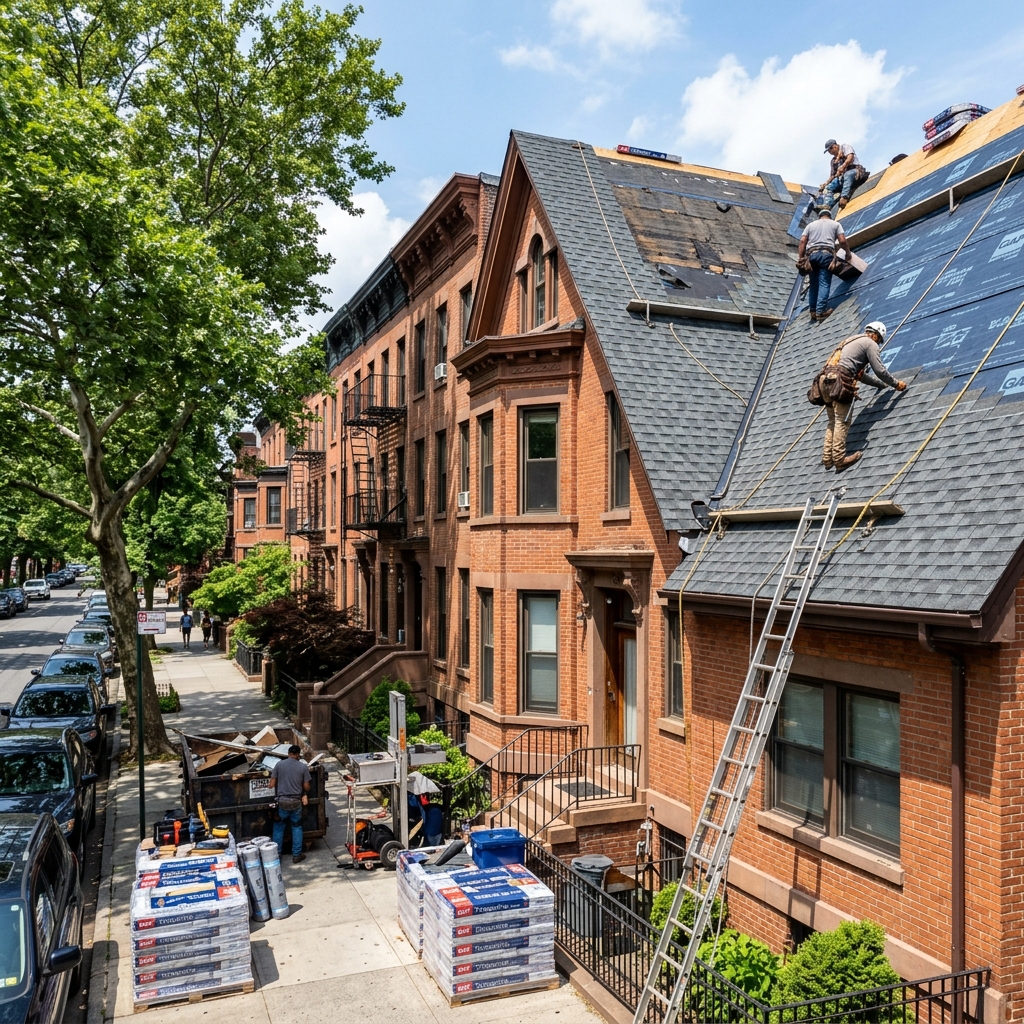
Emergency tarping is a temporary band-aid. Once the weather clears and the underlying roof decking has had time to dry, it's time for a permanent roof repair.
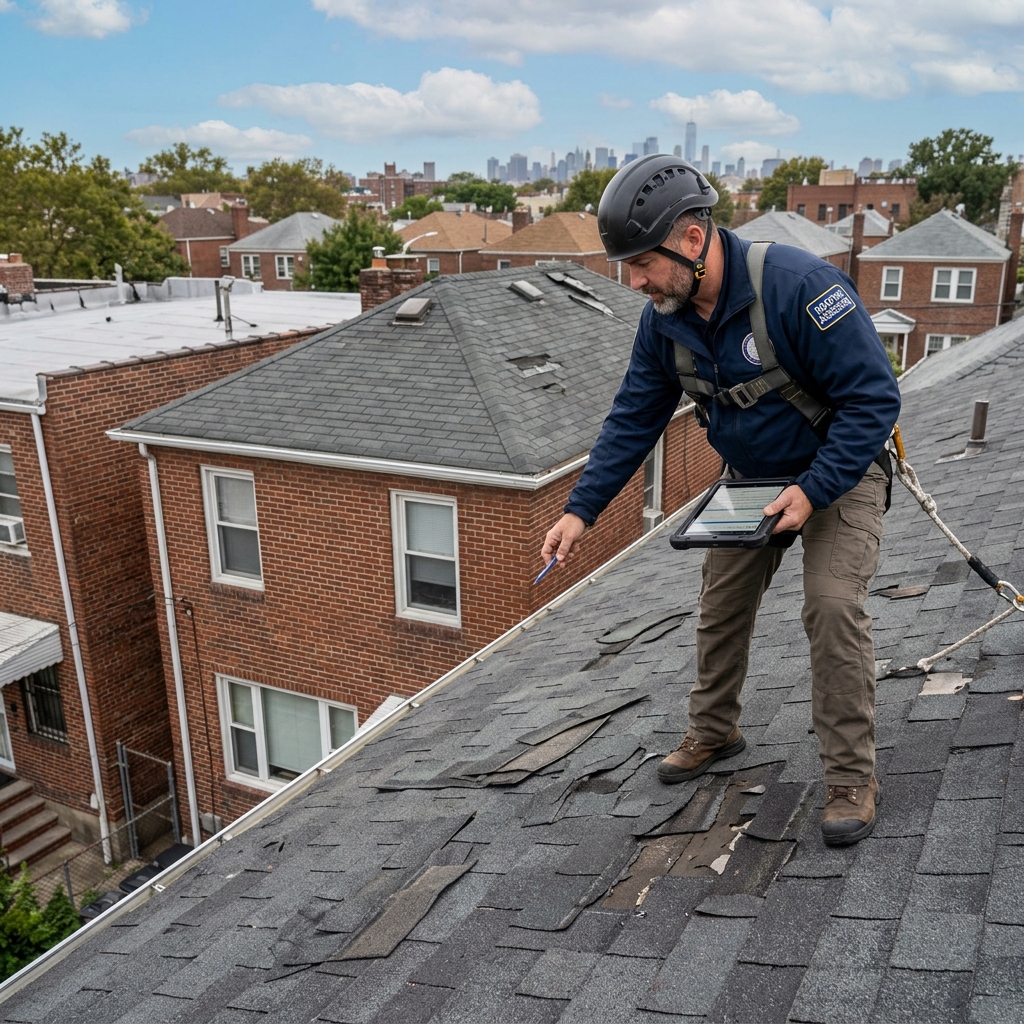
It is crucial that your contractor completely removes the emergency tarp and inspects the wooden decking beneath it. Applying new shingles or flat roofing membrane over damp plywood will trap moisture, leading to severe wood rot and black mold within months. Always ensure your contractor verifies the moisture content of the wood before installing the final roofing materials.
After a major New York storm, "storm chaser" roofing companies will flood the area offering cheap, immediate repairs. Always verify that any emergency contractor you hire is fully licensed and insured in the state of New York, and holds a physical local office.