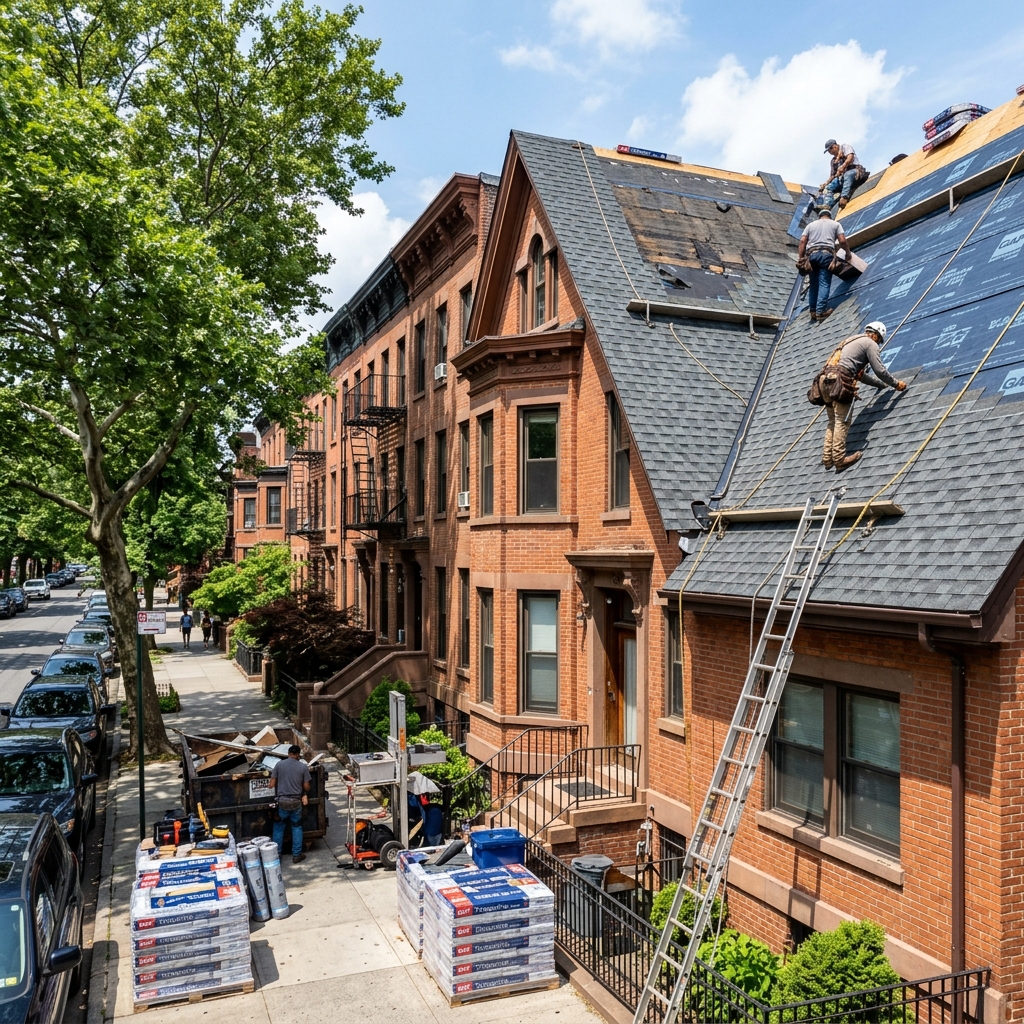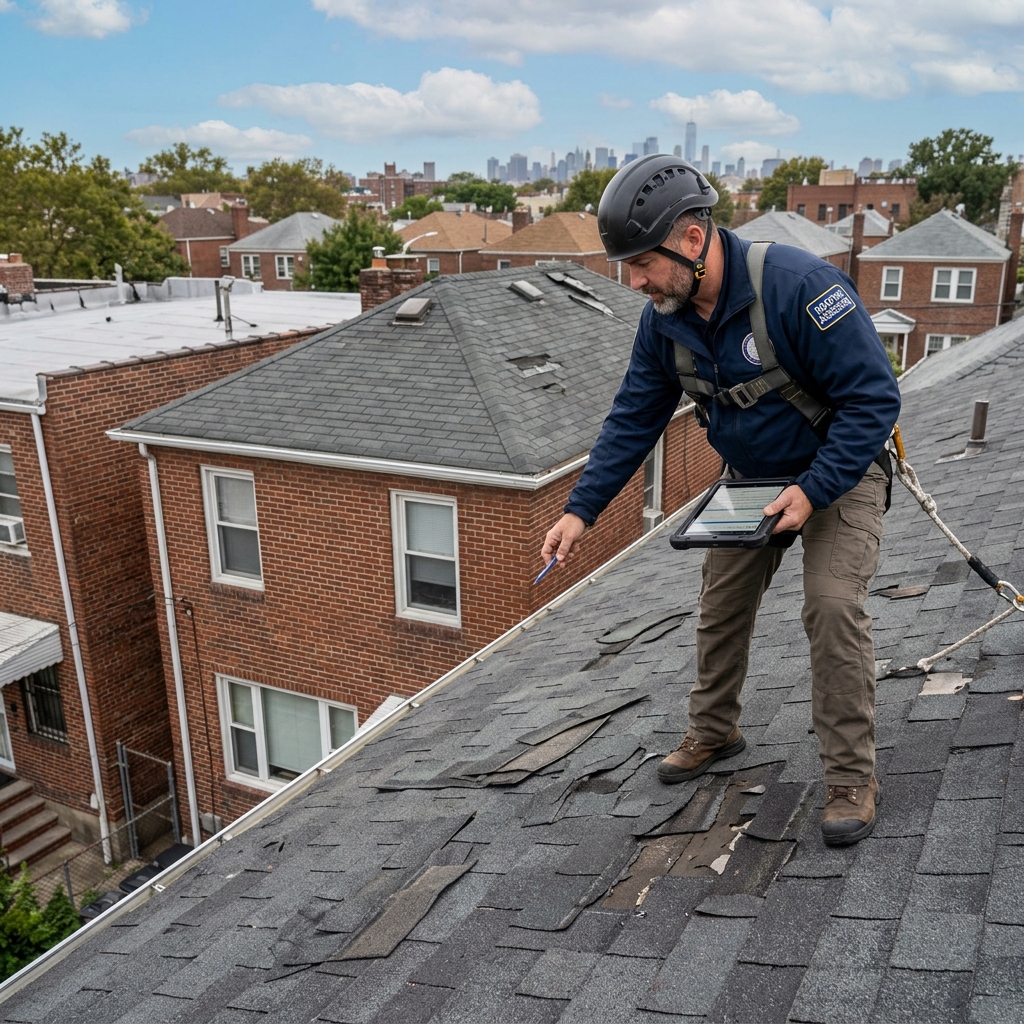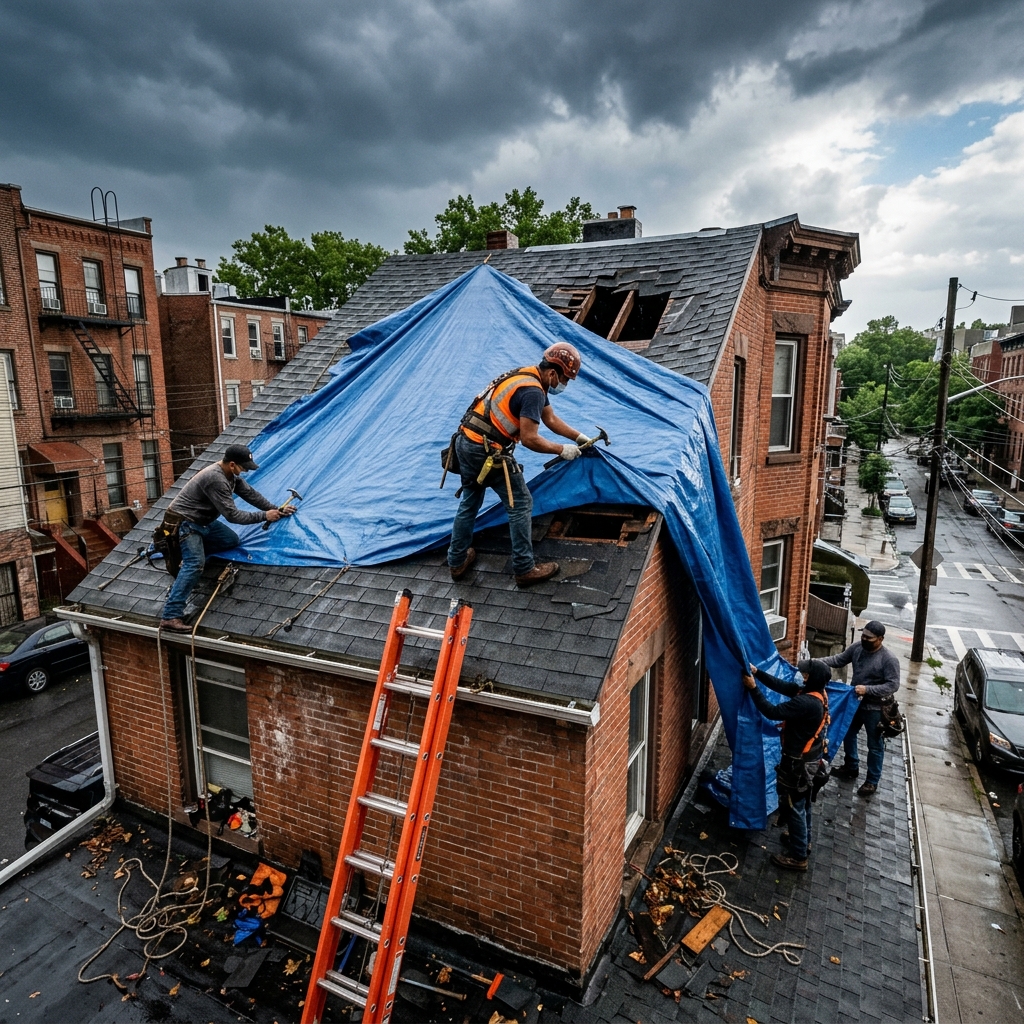

Brooklyn is defined by its stunning historic architecture. From the iconic tree-lined streets of Park Slope to the beautiful row houses of Brooklyn Heights, classic brownstones are the heart of the borough. But maintaining these 19th-century marvels comes with a unique set of historic brownstone roofing challenges that require specialized expertise.
Historic brownstones feature intricate parapet walls, ornate cornices, and integrated drainage systems that require specialized historic roof restoration techniques. Applying standard commercial roofing methods to a 130-year-old brownstone can trap moisture and destroy the historic masonry.
The Complexity of Parapet Walls
Unlike a suburban home with a pitched roof that sheds water over the eaves, a typical Brooklyn brownstone has a flat roof surrounded by low masonry walls called parapets. These walls present a massive vulnerability if not properly maintained.
- Coping Stones: The tops of parapet walls are capped with coping stones or metal flashing. Over decades, the mortar joints between coping stones degrade. Water seeps into the brickwork, freezing during New York winters, and pushing the brick apart—a process known as spalling.
- Flashing Failures: The intersection where the flat roofing membrane meets the vertical parapet wall must be sealed perfectly with base flashing and counter-flashing. If a roofing company in Brooklyn uses cheap mastic instead of proper metal counter-flashing, it will fail within a few years.
Internal Scuppers and Drainage Headaches
Because brownstones are attached (row houses), water cannot drain off the sides. It must be directed to the front or back of the building. Most historic brownstones use internal drains or scuppers (holes cut through the parapet) that lead to a leader pipe.
If these drainage systems are not strictly maintained, water will pond on the roof. Even worse, if an internal drain pipe cracks inside the walls of your brownstone, it can cause catastrophic interior water damage that is incredibly difficult to detect until it's too late. Regular roof maintenance is absolutely vital for these systems.
The Ventilation Problem
In the late 1800s, building codes didn't account for modern insulation or HVAC systems. Today, homeowners heavily insulate their brownstones to save on energy costs. However, trapping heat and moisture in the small attic cavity (the space between the top floor ceiling and the flat roof) creates massive condensation issues.
Proper roof ventilation is required to allow this moisture to escape. Without it, the wooden roof deck will rot from the inside out. Historic roof restoration often involves creatively installing discreet venting solutions that protect the roof deck without compromising the building's historic facade.
Choosing the Right Waterproof Roofing Systems
When it comes time for a roof replacement, selecting the right material for a brownstone is crucial. The roof must be walkable (as brownstone roofs are often used for HVAC access or roof decks) and incredibly waterproof.
- Modified Bitumen: This is the traditional standard for brownstone roofing. It is thick, durable, and highly resistant to foot traffic.
- Fluid-Applied Membranes: For roofs with extreme detailing, numerous skylights, or historic roof hatches, seamless liquid-applied waterproofing systems offer unmatched protection.
Before purchasing a historic brownstone in Brooklyn, always hire a specialized roofing contractor to perform a targeted roof inspection. General home inspectors frequently miss subtle, expensive flaws in parapet masonry and internal flat roof drainage.