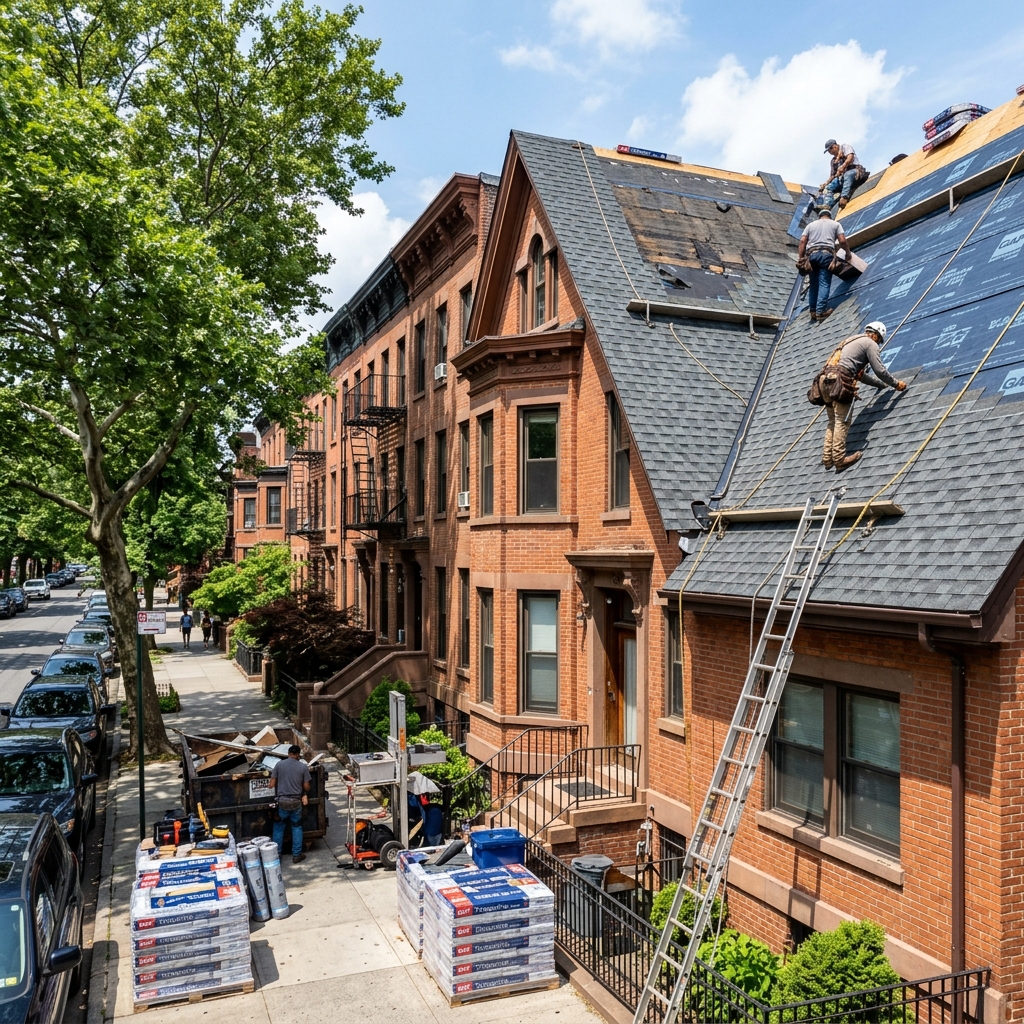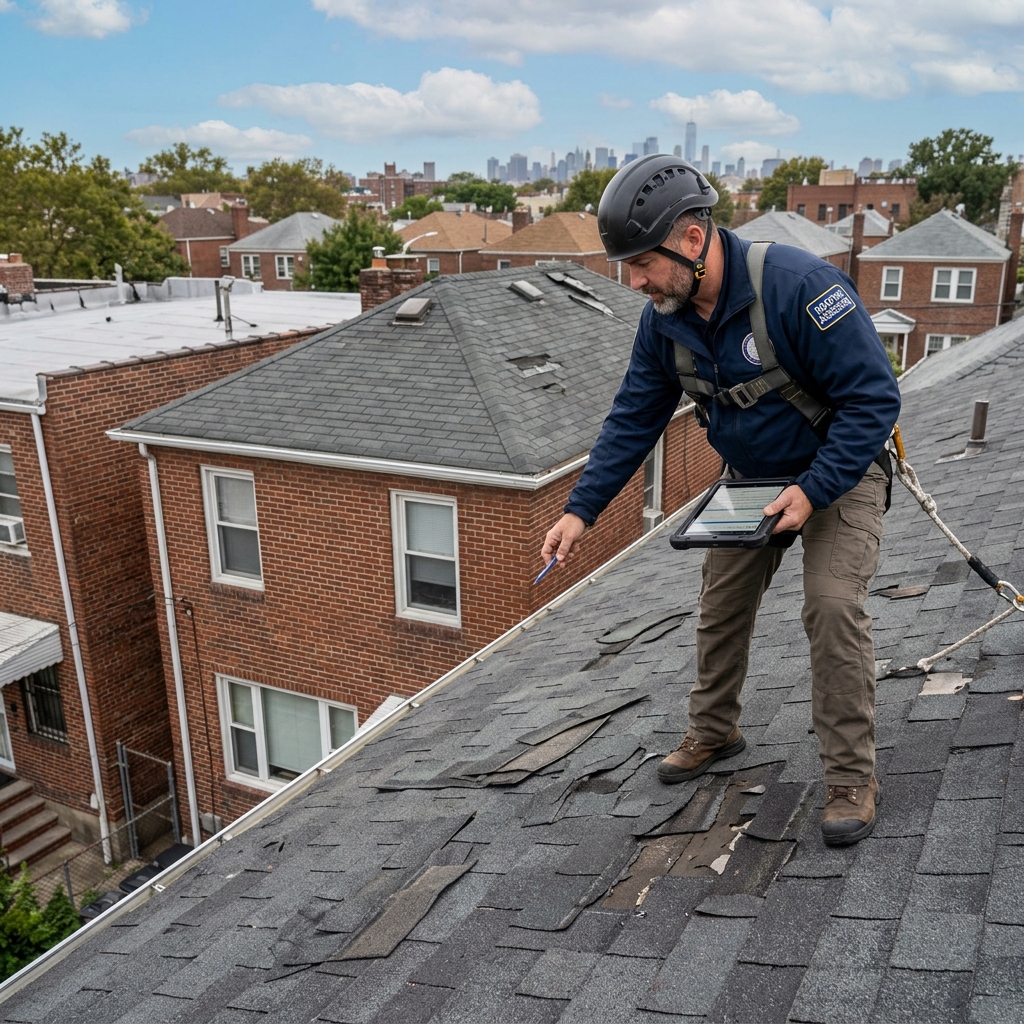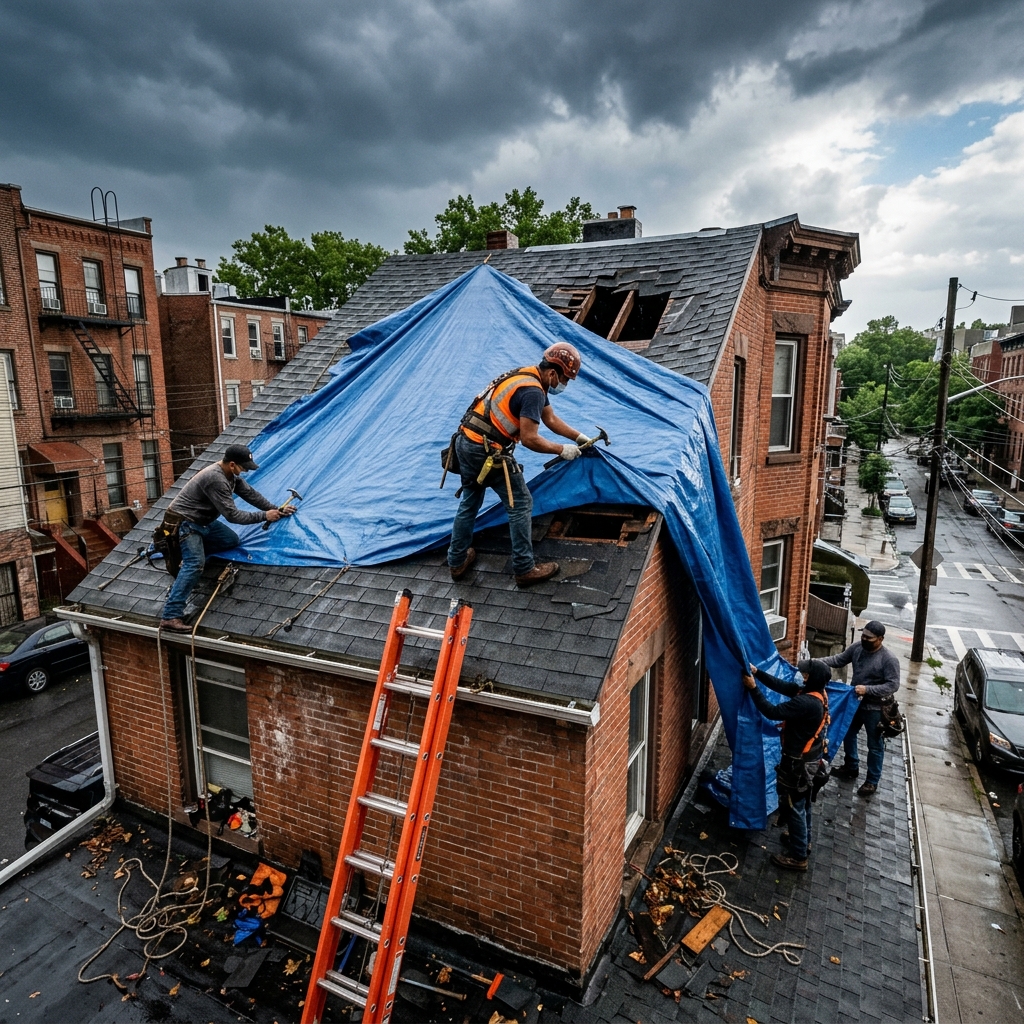

While Brooklyn and Queens share a border, their residential architecture and subsequent roofing requirements are often worlds apart. A contractor used to working exclusively on detached suburban homes in Queens might struggle with the nuances of a historic Park Slope brownstone. Understanding exactly how roofing needs differ between Brooklyn and Queens homes is crucial when hiring a roofing company in Brooklyn NY.
Brooklyn is dominated by attached row houses and brownstones requiring specialized flat roofing and parapet wall maintenance. Queens features vastly more detached, single-family homes that rely on traditional pitched asphalt shingle roofs and standard gutter systems.
The Brooklyn Roofing Profile: Density and Flat Roofs
Brooklyn's urban density dictates its roofing style. Neighborhoods like Bedford-Stuyvesant, Brooklyn Heights, and Williamsburg are packed with historic brownstones and attached multi-family buildings.
- Flat Roofing Dominance: The vast majority of these structures use flat roofs. This means property owners must navigate materials like Modified Bitumen, EPDM rubber, or TPO membranes rather than shingles.
- Shared Party Walls: In Brooklyn, your roof often connects directly to your neighbor's roof via a shared parapet wall. A leak on their side of the flashing can easily travel under the membrane and damage your ceiling. This requires highly precise flashing and counter-flashing techniques that Queens contractors may rarely encounter.
- Internal Drainage Systems: Because water cannot drain off the sides of an attached building, Brooklyn roofs rely heavily on internal scuppers and internal drains that run through the building's interior. Roof maintenance to keep these clear is non-negotiable.
The Queens Roofing Profile: Space and Pitches
As you move further into Queens (neighborhoods like Bayside, Douglaston, or Forest Hills), the density drops. The architecture shifts dramatically toward detached single-family homes, Tudors, and Cape Cods.
- Pitched Roofs and Shingles: The primary roofing material in Queens is the architectural asphalt shingle. These roofs shed water naturally using gravity, making them generally easier and cheaper to replace than Brooklyn's flat roofs.
- Traditional Gutters and Eaves: Queens homes rely on exterior aluminum or copper gutters attached to the fascia board. Maintaining these is much easier than dealing with an internal Brooklyn scupper drain.
- Attic Ventilation: Because Queens homes have traditional pitched roofs, they have actual attic spaces. Ensuring proper intake (soffit) and exhaust (ridge) ventilation is a massive part of a Queens roof replacement, preventing heat buildup and ice dams.
Shared Challenges: New York Weather
Despite their architectural differences, both boroughs face the exact same punishing New York climate.
- Coastal Winds: Both South Brooklyn (Coney Island) and the Rockaways in Queens face severe Atlantic wind loads. High-wind-rated shingles and mechanically fastened flat roof membranes are required in both areas.
- Freeze-Thaw Cycles: Both boroughs suffer from intense freeze-thaw cycles in the winter. In Queens, this leads to ice dams on the eaves. In Brooklyn, it leads to spalling brick on parapet walls and cracked flat roof seams.
When requesting quotes, always ask the contractor for references in your specific borough and for your specific building type. A roofer who does amazing work on Queens pitched roofs may not be qualified to handle a historic Brooklyn brownstone flat roof.